
Is your marketing strategy truly generating demand, or are you just shouting into the void? In today’s competitive landscape, superficial efforts won’t cut it. Demand generation isn’t just about casting a wide net—it’s about employing precise tactics that attract, engage, and convert your ideal customers.
This blog post delves into the concept and strategies of demand generation, spotlighting the techniques that can transform your marketing success. Ready to boost your brand’s visibility and drive sustainable growth? Let’s explore the proven methods that align marketing efforts with sales processes to fuel your revenue.
What is Demand Generation?
Demand generation encompasses all marketing activities that create awareness and interest in a company’s products or services. It is a broad strategy that includes various tactics such as content marketing, social media marketing, and PPC advertising. These efforts aim to generate demand by educating potential customers and nurturing them through the buying process, eventually converting them into loyal clients.
The importance of demand generation lies in its ability to align marketing efforts with sales processes to drive revenue. By creating a seamless flow from initial awareness to final purchase, demand generation strategies ensure that marketing activities directly contribute to sales outcomes. This alignment not only improves the efficiency of marketing campaigns but also maximises ROI by focusing on high-quality leads and converting them effectively.
Key tactics used in demand generation:
- Content Marketing
- Social Media Marketing
- PPC Advertising
- Email Marketing
- Webinars and Events
These tactics contribute significantly to overall marketing strategies by targeting different stages of the customer journey. Content marketing attracts potential customers through valuable information, while social media marketing engages them on platforms they frequent. PPC advertising reaches a broad audience quickly, and email marketing nurtures leads over time. Webinars and events provide direct engagement opportunities, fostering deeper connections with prospects. Collectively, these tactics ensure a holistic approach to demand generation, driving both brand awareness and revenue.
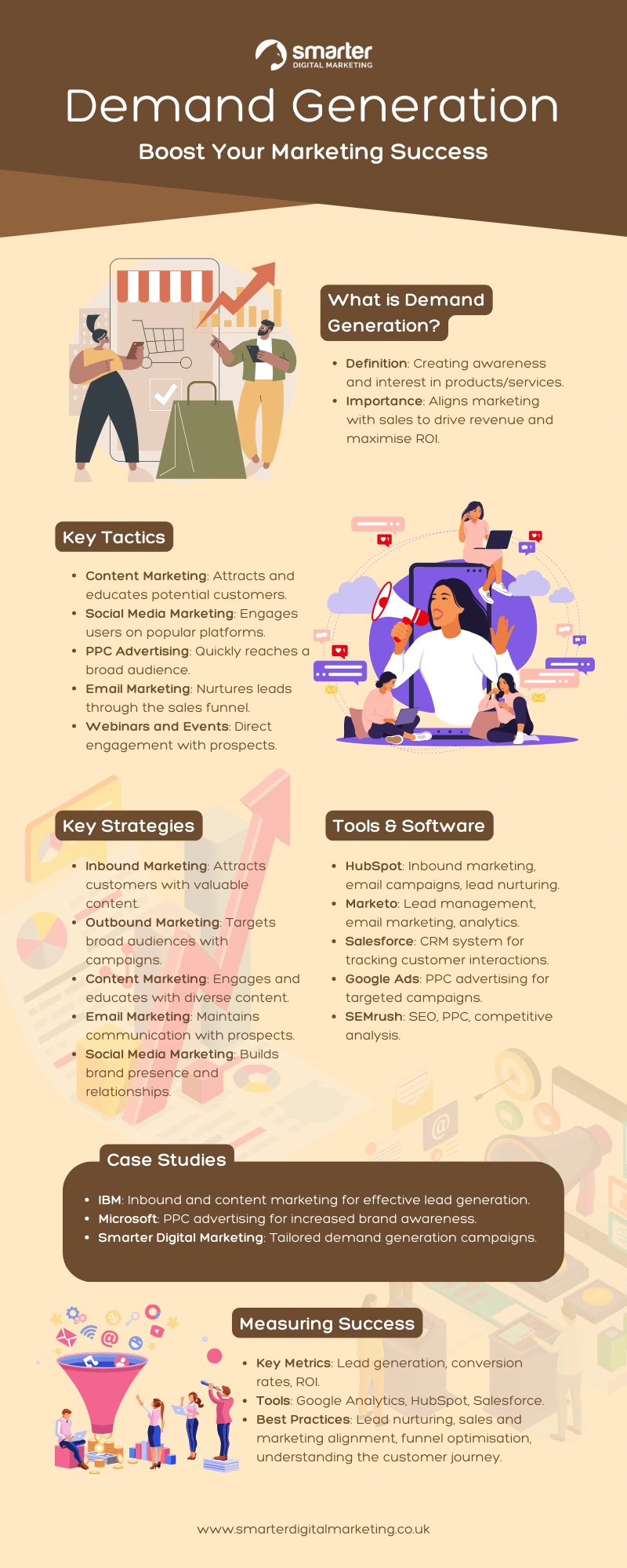
Key Strategies for Effective Demand Generation
A multi-faceted approach is crucial for effective demand generation as it ensures that different stages of the customer journey are targeted. Combining various strategies maximises reach, engagement, and conversion rates.
Inbound Marketing
Inbound marketing attracts potential customers by providing valuable content that addresses their needs and challenges. This strategy involves creating blog posts, videos, whitepapers, and other forms of content that educate and inform the audience. By offering solutions and insights, inbound marketing helps build trust and establish the company as an authority in its field.
Outbound Marketing
Outbound marketing involves reaching broader audiences with targeted campaigns, such as display ads, cold emailing, and direct mail. This proactive approach aims to generate interest from potential customers who may not yet be aware of the company’s products or services. Outbound marketing complements inbound efforts by expanding the pool of potential leads and driving immediate engagement.
Content Marketing
Content marketing focuses on engaging and educating prospects through various content types, including articles, infographics, webinars, and podcasts. High-quality content addresses the pain points of the audience, providing them with valuable information that guides them through the decision-making process. Effective content marketing nurtures leads and moves them closer to conversion.
Email Marketing
Email marketing is essential for nurturing leads and maintaining ongoing communication with prospects. Through personalised email campaigns, companies can deliver relevant content, updates, and offers that keep leads engaged. Automated email sequences can be used to guide prospects through the sales funnel, ensuring consistent touchpoints and increasing the likelihood of conversion.
Social Media Marketing
Social media marketing builds relationships and brand presence on social platforms such as Facebook, LinkedIn, Twitter, and Instagram. By sharing valuable content, engaging with followers, and participating in conversations, companies can foster a sense of community and trust. Social media also offers opportunities for targeted advertising, further enhancing the reach and effectiveness of demand generation efforts.
| Strategy | Description |
| Inbound Marketing | Attracts potential customers through valuable content. |
| Outbound Marketing | Reaches broader audiences with targeted campaigns. |
| Content Marketing | Engages and educates prospects through various content types. |
| Email Marketing | Nurtures leads and maintains communication. |
| Social Media Marketing | Builds relationships and brand presence on social platforms. |
Tools and Software for Demand Generation
Utilising the right tools and software is crucial for effective demand generation. Marketing automation platforms, CRM systems, and PPC advertising tools streamline marketing efforts, track customer interactions, and analyse campaign performance. These tools enable marketers to execute, monitor, and optimise campaigns with greater efficiency, ensuring a cohesive strategy that aligns with business objectives.
Essential tools and software for demand generation:
- HubSpot: A comprehensive marketing automation platform that helps manage inbound marketing, email campaigns, and lead nurturing.
- Marketo: A powerful marketing automation tool that focuses on lead management, email marketing, and analytics.
- Salesforce: A robust CRM system that tracks customer interactions, sales processes, and provides valuable insights for demand generation.
- Google Ads: A leading PPC advertising tool that enables targeted campaigns to reach potential customers quickly and effectively.
- SEMrush: An all-in-one marketing tool that offers SEO, PPC, and competitive analysis to enhance demand generation strategies.
These tools significantly improve the efficiency and effectiveness of demand generation campaigns. By automating repetitive tasks, tracking detailed customer data, and providing actionable insights, marketers can focus on high-value activities. This leads to better-targeted campaigns, higher conversion rates, and ultimately, increased revenue.
Case Studies: Successful Demand Generation Campaigns
Case studies of successful demand generation campaigns provide valuable insights into effective strategies and tactics. By examining real-life examples from companies like IBM and Microsoft, businesses can learn how to implement and optimise their own marketing campaigns for business growth and revenue generation.
IBM’s Demand Generation Strategy
IBM has leveraged inbound marketing and content marketing to drive leads effectively. By creating high-quality, informative content tailored to their target audience, they have established themselves as thought leaders in their industry. IBM’s strategy includes publishing whitepapers, case studies, and blog posts that address the specific pain points of their potential customers. This approach has helped IBM attract and nurture leads, guiding them through the buying process and ultimately converting them into customers.
Microsoft’s PPC Advertising Campaign
Microsoft utilised PPC advertising to enhance brand awareness and generate leads. By running targeted ads on search engines and social media platforms, Microsoft was able to reach a broader audience and drive immediate engagement. Their PPC campaigns were carefully crafted with compelling ad copy and targeted keywords, ensuring that they appeared in front of the right audience at the right time. This strategy not only increased their visibility but also resulted in a significant boost in lead generation and conversions.
Smarter Digital Marketing’s Success Stories
Smarter Digital Marketing has helped numerous clients implement successful demand generation campaigns. Their approach includes a combination of inbound marketing, content marketing, and PPC advertising tailored to each client’s specific needs. By focusing on creating valuable content and running targeted ads, they have enabled their clients to attract high-quality leads and achieve measurable business growth. Their success stories highlight the importance of a cohesive and well-executed demand generation strategy.
- Key takeaways from IBM’s campaign.
- Key takeaways from Microsoft’s campaign.
- Key takeaways from Smarter Digital Marketing’s campaigns.
Measuring the Success of Demand Generation Campaigns
Measuring the success of demand generation campaigns is crucial for understanding their effectiveness and making informed decisions. Tracking performance helps identify which strategies are working and where adjustments are needed. Accurate measurement ensures that resources are allocated efficiently, leading to higher ROI and better overall results.
Key metrics to track include lead generation numbers, conversion rates, and return on investment (ROI). Lead generation numbers highlight the volume of potential customers entering the funnel, while conversion rates indicate the percentage of leads that turn into paying customers. ROI analysis reveals the financial return generated from the campaign relative to its costs, providing a clear picture of its profitability.
Data analytics tools are essential for gathering and analysing this information. Platforms like Google Analytics, HubSpot, and Salesforce offer comprehensive insights into campaign performance. These tools help marketers track key metrics, identify trends, and make data-driven adjustments to optimise campaigns. By leveraging data analytics, businesses can enhance their demand generation efforts, ensuring continuous improvement and sustained success.
Best Practices for Demand Generation
Implementing best practices for demand generation ensures a structured approach to attracting and converting leads. By focusing on key areas such as lead nurturing, sales and marketing alignment, funnel optimisation, and understanding the customer journey, companies can build effective campaigns that drive significant results.
Effective lead nurturing involves maintaining continuous engagement with potential customers. By providing relevant content and personalised communication, businesses can keep leads interested and guide them through the buying process. Lead nurturing increases the likelihood of conversion by building trust and addressing the specific needs of prospects at each stage of their journey.
Aligning marketing and sales teams is crucial for seamless demand generation. This alignment ensures that both teams work towards common goals and share valuable insights. Sales teams can provide feedback on lead quality, while marketing teams can adjust their strategies accordingly. Effective communication and collaboration between these departments result in a cohesive approach that maximises lead conversion rates.
Optimising the marketing funnel is essential for guiding prospects smoothly from awareness to conversion. This involves analysing each stage of the funnel and identifying areas for improvement. By refining tactics such as content delivery, call-to-actions, and follow-up processes, businesses can ensure that leads move efficiently through the funnel, reducing drop-off rates and enhancing overall effectiveness.
Understanding the customer journey allows businesses to tailor their demand generation strategies to meet the specific needs and behaviours of their target audience. By mapping out the customer journey, companies can identify key touchpoints and deliver relevant content and experiences at each stage. This personalised approach not only improves engagement but also increases the likelihood of conversion.
Actionable tips for implementing best practices:
- Develop a lead nurturing plan with personalised content.
- Facilitate regular communication between marketing and sales teams.
- Continuously analyse and optimise the marketing funnel.
- Map out the customer journey to identify key touchpoints.
Following these best practices provides numerous benefits, including higher lead conversion rates, improved customer relationships, and increased revenue. By focusing on these areas, businesses can create effective demand generation campaigns that drive long-term success.
Final Words
Demand generation integrates various marketing activities to create awareness and interest in a company’s products or services. From inbound and outbound marketing to social media and email marketing, these strategies align efforts and drive revenue.
Utilising tools like marketing automation and CRM systems enhances efficiency. Case studies from IBM and Microsoft demonstrate successful demand generation in action.
Measuring success through metrics and analytics ensures continual improvement. Best practices, including lead nurturing and sales alignment, optimise the marketing funnel.
Focusing on demand generation propels online visibility, qualified leads, and ROI.
