
Do you often find your emails relegated to the dreaded spam folder? Email deliverability is crucial for successful marketing campaigns, directly impacting your open and conversion rates. Yet, a staggering number of legitimate emails are misclassified as spam daily. This article delves into proven best practices to keep your emails front and centre in your recipients’ inboxes. By understanding how spam filters work, crafting compelling content, and adhering to regulatory standards, you can enhance your email marketing effectiveness and boost your sender reputation.
Best Practices to Avoid the Spam Folder
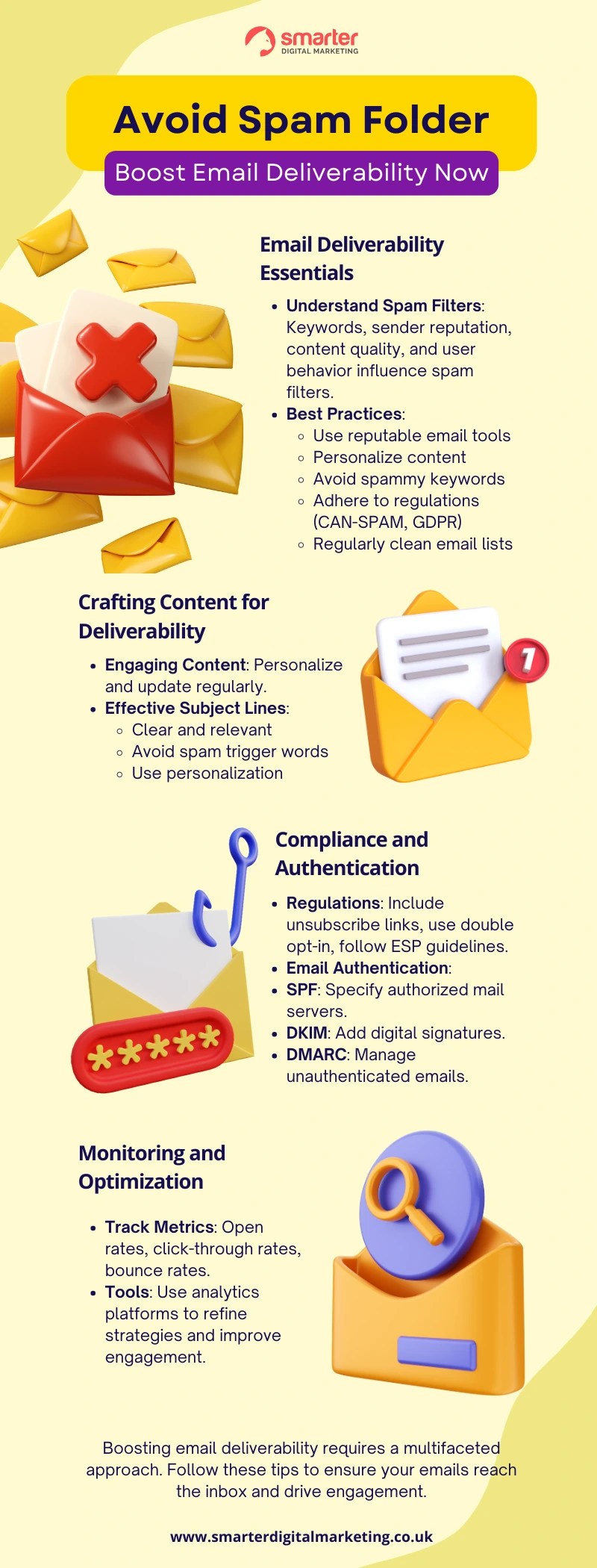
Avoiding spam filters is crucial for any successful email marketing campaign. Spam filters analyse various factors, such as keywords, email content, and sender reputation, to determine whether an email should be delivered to the inbox or marked as spam. Ensuring your emails reach the inbox can significantly improve engagement rates and drive better results for your campaigns. To avoid spam filters, it is essential to craft emails that comply with best practices and adhere to email regulations.
Sender reputation plays a pivotal role in email deliverability. A positive sender reputation signals to spam filters that your emails are trustworthy and should be delivered to the inbox. Factors influencing sender reputation include your email sending history, bounce rates, and recipient engagement levels. Maintaining a high sender reputation involves consistently sending relevant and engaging content to your subscribers.
- Use reputable email marketing tools
- Personalise email content
- Avoid spammy keywords
- Adhere to email regulations like CAN-SPAM or GDPR
- Regularly clean your email list
Smarter Digital Marketing can assist with SEO-related work to improve your sender reputation. By optimising your online presence and ensuring your website complies with best practices, you can enhance your credibility as an email sender. This, in turn, can lead to better email deliverability and higher engagement rates among your subscribers.
Understanding Spam Filters and How They Work
Spam filters are essential tools that email providers use to protect users from unwanted and potentially harmful emails. These filters evaluate various criteria to determine whether an email should land in the inbox or be relegated to the spam folder. The primary factors include spam trigger words, sender reputation, email content, and user behaviour. By understanding these criteria, marketers can craft emails that are more likely to bypass spam filters and reach their intended audience.
Spam trigger words are a common reason emails get flagged as spam. Words like “free,” “guarantee,” “winner,” and “urgent” often raise red flags for spam filters. Including too many of these in your email content, especially in subject lines, can increase the likelihood of your email being marked as spam.
- Spam trigger words: Avoiding words that commonly trigger spam filters.
- Sender reputation: Maintaining a positive reputation based on email sending history and user engagement.
- Email content: Ensuring the content is relevant, well-structured, and free from excessive promotional language.
- User behaviour: Analysing how recipients interact with your emails to adjust strategies accordingly.
- Technical setup: Properly configuring email authentication methods like SPF, DKIM, and DMARC.
By adhering to these criteria, you can significantly improve your email deliverability and ensure your messages reach the intended recipients.
Crafting Email Content to Improve Deliverability
Engaging and personalised email content is crucial for improving email deliverability. Personalisation makes recipients more likely to engage with your emails, which signals to email providers that your content is valuable. Avoiding spammy keywords is also essential as filters can flag emails containing words commonly associated with spam. Instead, focus on providing relevant and valuable information tailored to your audience’s interests. Fresh email content that is regularly updated can keep subscribers engaged and reduce the likelihood of your emails being marked as spam.
Subject lines and email headers play a significant role in email deliverability. The subject line is the first thing recipients see and can determine whether they open the email. It should be clear, relevant, and free from spam trigger words. Email headers, including the ‘From’ name and email address, should be configured correctly to ensure recipients recognise the sender. Consistency in these elements helps build trust with your audience and improves the chances of your emails reaching the inbox.
Tips for Writing Effective Subject Lines
- Clarity and Relevance: Ensure the subject line clearly reflects the email content and is relevant to the recipient.
- Avoid Spam Trigger Words: Refrain from using words like “free,” “guarantee,” or “urgent,” which can raise red flags for spam filters.
- Personalisation: Include the recipient’s name or other personalised elements to increase engagement and open rates.
Ensuring Compliance with Email Regulations
Complying with email regulations is vital for maintaining a good sender reputation and ensuring high email deliverability. Failure to adhere to standards like CAN-SPAM and GDPR can result in penalties and damage to your brand’s credibility.
Key regulations include the CAN-SPAM Act and GDPR. The CAN-SPAM Act requires marketers to include unsubscribe links in their emails, use accurate ‘From’ names, and avoid deceptive subject lines. GDPR focuses on data protection and privacy, mandating explicit consent from recipients before sending emails and ensuring that personal data is handled responsibly. Adhering to these regulations not only keeps you compliant but also builds trust with your subscribers.
- Include Unsubscribe Links: Always provide a clear and easy way for recipients to opt out of future emails.
- Use Double Opt-In: Ensure subscribers confirm their email address by sending a confirmation email after they sign up.
- Follow Email Service Provider Guidelines: Adhere to best practices recommended by your email service provider to avoid being flagged as spam.
- Maintain Accurate Sender Information: Use a recognisable ‘From’ name and email address to avoid misleading recipients.
Using double opt-in methods offers several benefits. It ensures that the email addresses on your list are valid and that recipients genuinely want to receive your emails. This reduces the likelihood of spam complaints and improves engagement rates, ultimately boosting your email deliverability.
Managing Your Email List Effectively
Maintaining a clean email list is crucial for improving email deliverability and ensuring your marketing efforts yield positive results. A clean email list involves regularly removing inactive or invalid email addresses, which helps reduce bounce rates and spam complaints. This practice not only enhances your sender reputation but also increases the chances of your emails reaching the intended recipients. A clean list ensures that your messages are delivered to engaged and interested subscribers, thereby improving open rates and overall campaign effectiveness.
List segmentation is another essential strategy for effective email list management. Segmenting your email subscriber list allows you to tailor your content to specific audience groups based on their preferences, behaviour, or demographics. This targeted approach leads to more relevant and personalised emails, which can significantly boost engagement and conversion rates. By sending the right message to the right audience, you can foster stronger relationships with your subscribers and enhance the overall performance of your email campaigns.
- Regularly clean your email list to remove inactive or invalid addresses.
- Segment your list based on subscriber preferences and behaviour.
- Use double opt-in methods to ensure valid and interested subscribers.
- Monitor engagement metrics to identify and address any issues promptly.
Maintaining a healthy subscriber list is vital for the long-term success of your email marketing campaigns. A healthy list consists of active and engaged subscribers who are genuinely interested in your content. Regularly monitoring and updating your list helps ensure that your emails are well-received and effective in achieving your marketing goals. This proactive approach not only improves deliverability but also maximises the return on investment for your email marketing efforts.
Utilising Email Authentication Techniques
Email authentication is crucial for verifying the sender’s identity and maintaining a robust domain reputation. By implementing authentication techniques, businesses can significantly reduce the risk of their emails being marked as spam. These methods help email providers confirm that the emails are genuinely from the claimed sender and not from malicious actors. Effective email authentication not only boosts deliverability rates but also enhances the overall trustworthiness of your email communications.
Several key authentication techniques are essential for improving email deliverability. Sender Policy Framework (SPF), DomainKeys Identified Mail (DKIM), and Domain-based Message Authentication, Reporting & Conformance (DMARC) are the primary methods used. SPF allows domain owners to specify which mail servers are permitted to send emails on their behalf, helping to prevent spoofing. DKIM adds a digital signature to the email headers, ensuring the email content has not been tampered with during transit. DMARC builds on SPF and DKIM by providing a mechanism for domain owners to receive reports about email authentication failures and instruct email providers on how to handle unauthenticated emails.
- SPF: Specifies which mail servers can send emails on behalf of a domain.
- DKIM: Adds a digital signature to the email headers to verify the email’s integrity.
- DMARC: Provides a reporting mechanism and policy for handling unauthenticated emails.
Implementing these authentication techniques can greatly enhance your email deliverability by ensuring that your emails are recognised as legitimate by email providers. This, in turn, helps maintain a positive sender reputation and reduces the chances of your emails ending up in spam folders.
Monitoring and Analysing Email Performance
Monitoring email performance through email analytics is critical for understanding user engagement and enhancing email campaigns. By examining various metrics, marketers can gain insights into how recipients interact with their emails, enabling them to make data-driven decisions to optimise future campaigns. Email analytics not only help in identifying what works but also highlight areas that require improvement, ensuring continuous enhancement of email marketing strategies.
Key metrics to track include open rates, click-through rates, and bounce rates. Open rates indicate the percentage of recipients who open your emails, providing a measure of the effectiveness of your subject lines and sender reputation. Click-through rates measure the percentage of recipients who click on links within your email, reflecting the relevance and engagement level of your content. Bounce rates show the percentage of emails that could not be delivered, pointing to issues with email list quality or server configurations.
| Metric | Description | Best Practice |
| Open Rate | Percentage of recipients who open your email | Craft engaging and relevant subject lines |
| Click-Through Rate | Percentage of recipients who click on links within your email | Include clear and compelling calls-to-action |
| Bounce Rate | Percentage of emails that could not be delivered | Regularly clean and update your email list |
Smarter Digital Marketing can assist with email analytics by providing expert insights and tools for tracking and analysing these key metrics. By leveraging their expertise, businesses can ensure their email campaigns are optimised for maximum engagement and deliverability.
Final Words
Optimal email deliverability demands meticulous attention to each element influencing spam filters. Employing reputable tools, crafting personalised content, steering clear of spammy keywords, and adhering to regulations are all integral.
A strong sender reputation underpins effective email campaigns. Focus on engaging content, precise subject lines, and proper headers to bolster deliverability. Maintaining list hygiene and utilising authentication techniques further safeguard against spam folders.
Consistent monitoring ensures continuous improvement. Smarter Digital Marketing’s expertise can support these objectives, enhancing overall deliverability and marketing success.
FAQ
What are the best practices for avoiding the spam folder?
Avoiding the spam folder involves using reputable email marketing tools, personalising content, and adhering to regulations.
How can sender reputation affect email deliverability?
Sender reputation is crucial as it influences whether emails are flagged as spam. A good reputation improves deliverability.
How can good email content improve deliverability?
Good content engages the reader, is personalised, and avoids spammy keywords. These factors help emails reach the inbox.
Why are subject lines crucial for email deliverability?
Clear and relevant subject lines enhance deliverability by reducing the chances of being flagged as spam.
What are tips for writing effective subject lines?
Be clear and concise.
Make it relevant to the recipient.
Avoid spammy keywords.
Why is compliance with email regulations important?
Compliance with regulations such as CAN-SPAM and GDPR is essential to avoid legal repercussions and improve deliverability.
What are key email regulations to follow?
Provide unsubscribe links.
Use double opt-in.
Adhere to service provider guidelines.
Avoid deceptive subject lines.
What are the benefits of using a double opt-in method?
Double opt-in ensures only interested subscribers join, enhancing engagement and deliverability.
