
Could a machine understand your feelings better than a human ever could? Emotional AI marketing revolutionises brand interactions by deeply analysing consumer emotions through sophisticated AI technology. By recognising and responding to nuances in facial expressions, voice intonations, and text cues, brands can build more authentic customer connections. Discover how this cutting-edge technology not only gauges happiness or frustration but also transforms these emotions into actionable insights, enhancing both customer experience and brand loyalty. Learn how businesses employ Emotional AI to boost engagement and improve ROI in the competitive digital marketplace.
Understanding Emotional AI Marketing
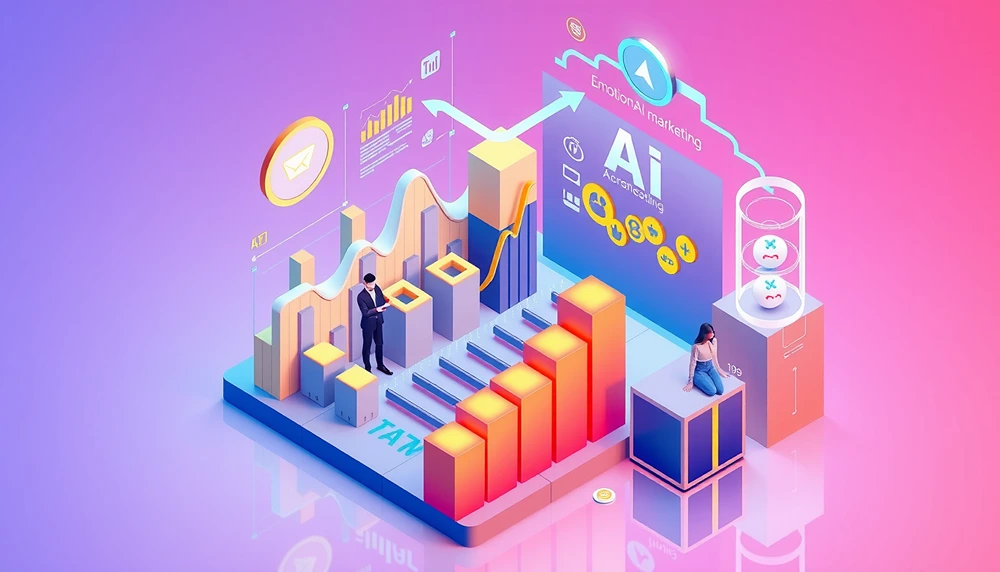
Emotion AI, also known as affective computing, is a branch of artificial intelligence dedicated to recognising and responding to human emotions. This technology leverages data from facial expressions, voice intonations, body language, and text cues. Key components include emotion detection, which identifies specific emotions from various inputs, and sentiment analysis, assessing the emotional tone of text. These technologies form the backbone of emotion recognition technology, enabling machines to interpret complex human emotions and reactions.
In the realm of marketing, Emotional AI analyses emotional responses to advertisements and campaigns by tracking facial expressions, voice patterns, and other cues. This allows brands to assess the effectiveness of their messaging, tailoring future campaigns to resonate more effectively with their audience. By integrating these insights, companies can create more engaging and personalised marketing content.
- Facial recognition software
- Voice analysis tools
- Biometric sensors
- Sentiment analysis algorithms
- Real-time data processing systems
The benefits for brands utilising Emotional AI are substantial. By tapping into emotion recognition technology, companies can forge deeper connections with their audiences, enhancing customer engagement and loyalty. This technology enables more precise targeting, ensuring that marketing messages align with the emotional states of consumers. As a result, brands can achieve increased conversion rates and foster stronger emotional bonds with their customers, leading to sustained brand loyalty and improved customer satisfaction.
Benefits of Emotional AI in Consumer Behaviour Analysis
Consumer behaviour analysis involves examining the ways consumers make purchasing decisions, influenced by their emotions, preferences, and motivations. It is pivotal for brands to understand these factors to effectively meet consumer needs and enhance customer experiences.
Emotional AI enhances this analysis by offering AI-driven emotional insights into consumer emotions. This technology can identify emotions such as happiness or frustration, allowing brands to tailor their interactions with customers. By converting these emotional signals into actionable data, businesses can significantly improve customer experience (CX) by making consumers feel understood and valued.
In real-world applications, Emotional AI enables brands to adjust marketing strategies in real time. For instance, if a customer exhibits dissatisfaction while browsing an app, the system can automatically adjust the content or offer targeted promotions to address the issue. This proactive approach ensures that customer concerns are promptly addressed, enhancing satisfaction and loyalty.
The insights gained from Emotional AI applications improve customer engagement by allowing brands to personalise interactions based on emotional data. Such precision in targeting ensures that marketing messages resonate with consumers on a personal level, increasing the likelihood of conversion. Ultimately, this fosters a deeper emotional connection between the brand and its audience, resulting in strengthened loyalty and long-term customer relationships.
Tools and Technologies in Emotional AI Marketing
Emotional AI marketing relies on a suite of sophisticated tools designed to capture and interpret human emotions. Sentiment analysis tools evaluate the emotional tone in text, offering insights into consumer sentiments toward brands and products. Biometric sensors, such as facial recognition cameras and eye-tracking devices, detect subtle shifts in facial expressions and gaze, providing data on consumer reactions. Speech recognition systems analyse voice intonations to discern emotional cues, enhancing understanding of verbal interactions. These technologies work in unison to deliver comprehensive emotional data, forming the backbone of AI marketing applications.
Data collection and analysis in Emotional AI involve integrating inputs from multiple sources. Cameras, sensors, and microphones gather raw emotional data, which is then processed using deep learning algorithms. By comparing this data against extensive real-world datasets, Emotion AI systems refine their accuracy and predictive capabilities over time. This process ensures that the emotional insights generated are both relevant and actionable, driving more effective marketing strategies.
| Tool | Function |
| Sentiment Analysis | Evaluates the emotional tone in text |
| Facial Recognition | Detects emotional expressions in facial movements |
| Eye-Tracking Devices | Monitors gaze patterns to infer attention and interest |
| Speech Recognition | Analyses voice intonations for emotional cues |
| Biometric Sensors | Captures physiological responses like heart rate |
The importance of these technologies in modern marketing strategies cannot be overstated. They provide brands with the ability to understand and respond to consumer emotions in real-time, enhancing the personalisation of marketing efforts. By leveraging emotional data collection, companies can tailor their messaging to align with the emotional states of their audience, ensuring greater engagement and conversion. These insights enable brands to forge deeper, more meaningful connections with consumers, ultimately boosting brand loyalty and driving business success.
Ethical Considerations in Emotional AI Marketing

Ethical considerations in Emotional AI marketing primarily revolve around data privacy and consent. The collection of sensitive emotional data, such as facial expressions and voice intonations, necessitates stringent privacy measures. Consumers must be aware of how their data is being used, and explicit consent should be obtained before any data collection. This ensures that individuals are not inadvertently subjected to intrusive monitoring. The implications of mishandling emotional data are profound, potentially leading to breaches of privacy and erosion of consumer trust. Thus, AI ethical considerations are paramount, demanding that brands operate within a framework that respects individual rights and fosters transparency.
- Obtain explicit consent before collecting emotional data.
- Ensure data encryption to protect sensitive information.
- Limit access to emotional data to authorised personnel only.
- Regularly audit data handling practices to ensure compliance.
- Provide consumers with clear opt-out options.
Practising ethical standards in emotional data handling is crucial for maintaining consumer trust. Companies must balance innovation with ethical responsibility, ensuring that the deployment of Emotional AI aligns with societal norms and expectations. Transparent practices not only safeguard consumer interests but also enhance brand reputation, positioning the company as a trustworthy entity in the marketplace. By prioritising AI ethical implications, brands can foster a positive relationship with their audience, ensuring that the benefits of Emotional AI are realised without compromising ethical integrity.
Future Trends and Impact of Emotional AI on Marketing Efficiency
Emotional AI market trends indicate a shift towards more sophisticated emotion recognition capabilities. As technology advances, Emotional AI is poised to integrate seamlessly with other AI systems, such as natural language processing and machine learning. This integration will enable real-time emotion detection, allowing brands to capture nuanced emotional data with unprecedented accuracy. Additionally, Emotional AI is expected to find broader applications across various sectors, not just in marketing but also in healthcare, education, and customer service. This expansion will enhance its ability to provide contextually relevant insights, thereby enriching user experiences and driving engagement.
How will these trends shape marketing strategies? The answer lies in predictive analytics in marketing. By leveraging Emotional AI, brands can anticipate consumer behaviour based on emotional responses, enabling more informed decision-making. This predictive capability will allow marketers to pre-emptively adjust their strategies, ensuring that their content remains relevant and impactful. As a result, marketing efforts will become more targeted and efficient, reducing wastage and maximizing return on investment.
- Increased personalisation of marketing messages
- Enhanced customer engagement and satisfaction
- Greater efficiency in campaign management
- Improved predictive analytics for consumer behaviour
- Strengthened emotional connections with brand audiences
Companies like Smarter Digital Marketing are at the forefront of leveraging these advancements. By integrating Emotional AI into their digital marketing strategies, they can offer highly personalised content that resonates with consumers on an emotional level. This approach not only enhances marketing efficiency but also builds stronger brand loyalty. By embracing Emotional AI technologies, businesses can stay ahead of the curve, ensuring that their marketing strategies are both innovative and effective, ultimately leading to sustained growth and competitive advantage.
Final Words

Emotional AI marketing is transforming the way brands engage with consumers by leveraging emotion detection and sentiment analysis. Brands benefit from AI-driven emotional insights that enable deeper connections with customers, thereby enhancing consumer behaviour analysis and engagement. Utilising advanced sentiment analysis tools and technologies allows for precise emotional data collection, which is crucial for modern marketing strategies.
Ethical considerations, including data privacy and consumer trust, must accompany these innovations. As Emotional AI continues to evolve, its capability to personalise marketing strategies will significantly impact efficiency and ROI. Embracing these developments can position businesses for future success.
FAQ
How is emotional intelligence used in marketing?
Emotional intelligence in marketing involves using AI to analyse emotional reactions to products and advertisements. It helps brands connect with consumers by adjusting messaging based on detected emotional responses.
What is an example of emotional AI?
An example of emotional AI is a customer service chatbot that adapts its responses based on the user’s emotional state, identified through voice tone analysis or typed sentiment.
Is there an emotional support AI?
Emotional support AI exists in the form of applications providing mental health assistance, like virtual therapy sessions, using AI to mirror and respond empathetically to users’ emotions.
Is there an AI that detects emotions?
AI systems can detect emotions by analysing facial expressions, voice intonations, and body language, converting these cues into data to understand human emotional states.
Can AI read human emotions?
AI can be designed to read human emotions by employing sensors and algorithms that interpret physiological and expressive signals to determine emotional states.
Can AI show empathy?
AI systems can simulate empathetic responses by recognising emotional cues and responding accordingly, though true empathy, being a complex human trait, remains beyond AI’s current capabilities.
For professional support with this, see our PPC management.
For professional support with this, see our digital marketing services.
For professional support with this, see our web design services.
For professional support with this, see our about Smarter Digital Marketing.
For professional support with this, see our local SEO across Scotland and the UK.
