
If content isn’t the king of digital marketing, then what is? In today’s competitive online landscape, high-quality content has become essential for brands aiming to enhance their online visibility and drive traffic. By providing valuable and relevant information, businesses can attract and retain a loyal audience, paving the way for higher engagement and better ROI. This article explores why content remains the bedrock of successful digital marketing strategies and how it can transform your approach to lead generation, website optimisation, and overall digital performance.
Why Content is King
High-quality content is the cornerstone of effective digital marketing. It drives traffic to websites by attracting and retaining visitors, and it plays a critical role in engaging audiences. By providing valuable and relevant information, content meets the needs and interests of potential customers, making it indispensable in any digital marketing strategy.
Content that is informative and well-crafted drives traffic by keeping visitors on the site longer and encouraging them to explore further. Engaging content builds a loyal audience, as it fosters trust and connection with the brand. This audience engagement translates to repeat visits and a higher likelihood of conversions, making content an essential tool for achieving marketing goals.
High-quality content also significantly enhances SEO efforts. Here are five ways in which content improves SEO:
- Keyword Integration: Incorporating relevant keywords helps search engines understand the content’s subject matter.
- Backlinks: High-quality content attracts backlinks from reputable sources, boosting domain authority.
- User Experience: Well-structured content improves user experience, reducing bounce rates.
- Content Freshness: Regularly updating content signals to search engines that the site is active and relevant.
- Internal Linking: Effective internal linking strategies improve site navigation and distribute ranking power across pages.
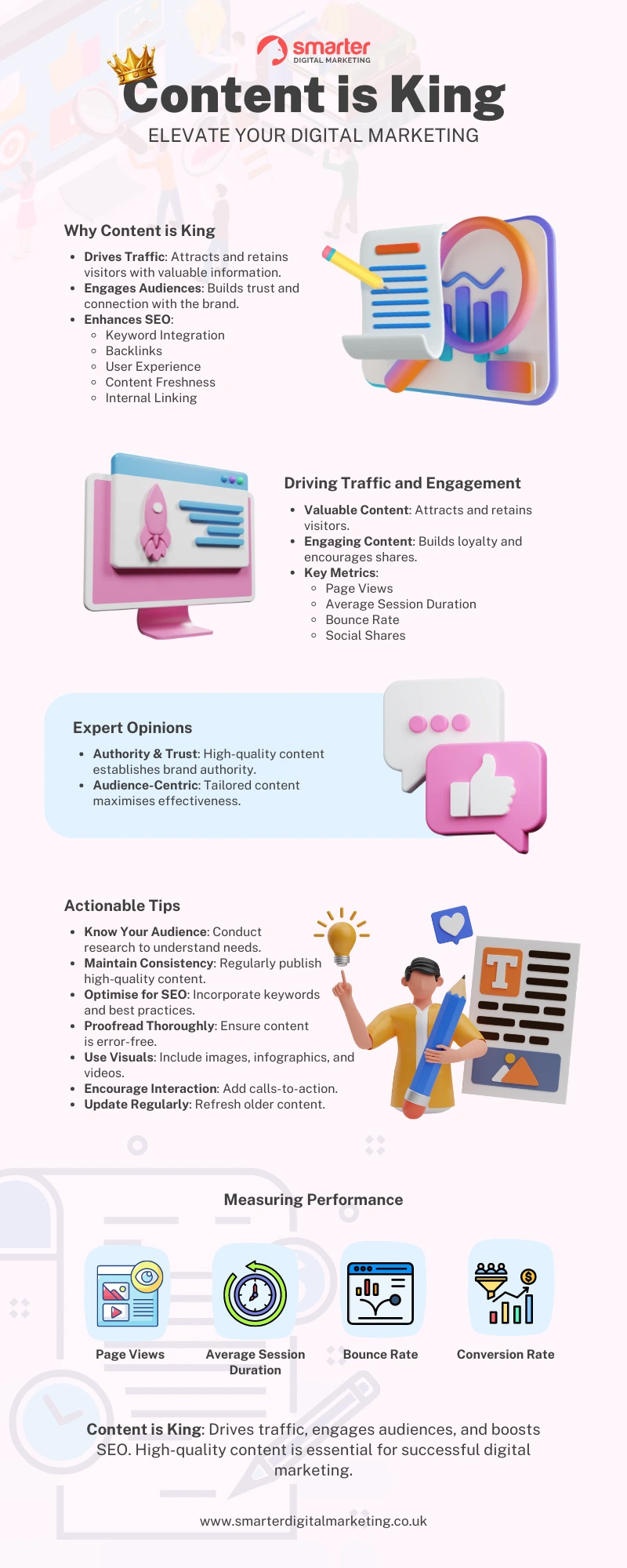
The Role of Content in Driving Traffic and Engagement
High-quality content is vital for driving traffic to websites. By providing valuable and relevant information, content attracts and retains visitors, ensuring that they spend more time on the site. The longer visitors stay, the more likely they are to explore other pages, reducing bounce rates and increasing overall engagement. Effective content creation focuses on understanding the audience’s needs and interests, ensuring that every piece of content resonates with them.
Creating engaging content is crucial for building a loyal audience. Content that is informative, entertaining, or emotionally resonant encourages repeat visits and fosters a deeper connection with the brand. This loyalty translates to higher conversion rates, as satisfied visitors are more likely to become customers. Engaging content also prompts users to share it within their networks, amplifying its reach and driving more traffic back to the website.
Measuring content performance is essential to understand its impact on traffic and engagement. Key metrics help determine how well content is performing and guide future content strategy adjustments. The following table outlines four key metrics used to measure traffic and engagement:
| Metric | Description |
| Page Views | The total number of times a page is viewed, indicating overall website traffic. |
| Average Session Duration | The average amount of time visitors spend on the site, reflecting engagement levels. |
| Bounce Rate | The percentage of visitors who leave after viewing a single page, indicating content effectiveness. |
| Social Shares | The number of times content is shared on social media, measuring its reach and resonance. |
Expert Opinions on Why Content is King
Expert opinions consistently underline that content plays a pivotal role in establishing brand authority and trust among consumers. High-quality content serves as a foundation for effective digital marketing strategies. By providing valuable and relevant information, businesses can position themselves as industry leaders and reliable sources of information. This authority not only fosters consumer trust but also enhances brand credibility, making it easier to convert prospects into loyal customers.
Tailoring content to the target audience is crucial for maximising its effectiveness. Experts emphasise that understanding the audience’s needs, interests, and pain points allows for the creation of content that resonates deeply. A content strategy that prioritises audience-centric content ensures higher engagement rates and more meaningful interactions. Conducting regular content audits helps in identifying gaps and opportunities, enabling continuous improvement in content quality and relevance.
- Know Your Audience: Conduct thorough research to understand their needs and preferences.
- Maintain Consistency: Regularly publish high-quality content to keep the audience engaged.
- Optimise for SEO: Incorporate relevant keywords and follow best SEO practices to improve visibility.
Actionable Tips for Creating Valuable Content
Understanding the target audience is the cornerstone of effective content creation. To create content that resonates, businesses must first thoroughly research their audience’s needs, preferences, and pain points. This involves analysing demographic data, conducting surveys, and studying customer feedback. By gaining insights into what the audience values, content creators can tailor their messages to address specific interests and challenges, ensuring higher engagement and relevance.
Maintaining consistency in content production is crucial for building and retaining an audience. Consistent posting schedules help establish a reliable presence, making it easier for the audience to anticipate and engage with new content. Additionally, using a clear and compelling writing style enhances readability and keeps the audience’s attention. This involves crafting concise, informative, and engaging sentences that communicate the intended message effectively without overwhelming the reader.
High-quality content also benefits from being repurposed across different platforms, enhancing social media engagement and reaching a broader audience. By adapting blog posts into infographics, videos, or social media snippets, businesses can maximise the value of their content and maintain a steady flow of material across multiple channels.
- Proofread Thoroughly: Ensure content is free from grammatical errors and typos to maintain professionalism.
- Use Visuals: Incorporate images, infographics, and videos to make content more engaging.
- Incorporate SEO Best Practices: Use relevant keywords and optimise meta descriptions to improve search engine visibility.
- Encourage Interaction: Add calls-to-action to prompt readers to comment, share, or engage with the content.
- Update Regularly: Refresh older content with new information to keep it relevant and valuable.
Measuring Content Performance and Adjusting Strategies
Using analytics to measure content performance is crucial for refining strategies and enhancing future content efforts. Analytics provide insights into how well content resonates with the audience, which pieces drive the most traffic, and where improvements are needed. By continually monitoring performance metrics, businesses can make data-driven decisions that optimise their content marketing ROI and ensure their strategies remain effective.
Regularly updating content is essential for keeping the audience engaged and maintaining relevance. Fresh content signals to search engines that the website is active, which can improve SEO rankings. Additionally, updating older content with new information can boost its value and extend its lifespan. This practice not only keeps the audience informed but also enhances user experience, reducing bounce rates and increasing the time spent on the site.
- Page Views: Indicates overall website traffic and shows the popularity of individual pieces of content.
- Average Session Duration: Reflects audience engagement by measuring the time visitors spend on the site.
- Bounce Rate: Shows the percentage of visitors who leave after viewing a single page, indicating content effectiveness.
- Conversion Rate: Measures the percentage of visitors who take a desired action, such as making a purchase or signing up for a newsletter.
Final Words
Effective digital marketing hinges on high-quality content. High-quality content drives traffic, engages audiences, and enhances SEO.
Engaging content builds a loyal audience, increasing repeat visits. Case studies show success stories where quality content boosted conversion rates and customer loyalty.
Experts agree that content is fundamental to building brand authority. They highlight the importance of tailoring content to the audience.
Content is king. High-quality content underpins successful digital marketing strategies. Prioritising it fosters greater visibility, engagement, and ROI.
FAQ
Why is content considered important in digital marketing?
Content is crucial in digital marketing because it drives traffic, engages the audience, and improves SEO rankings, ultimately boosting online visibility and customer conversions.
How does high-quality content drive website traffic?
By providing valuable and relevant information, high-quality content attracts and retains visitors, encouraging repeat visits and fostering deeper connections with the brand.
What are some key SEO benefits of effective content?
Content improves SEO by:
- Incorporating relevant keywords.
- Earning backlinks from reputable sources.
- Optimising meta descriptions and headings.
- Enhancing user experience with engaging formats.
- Regularly updating to keep content fresh and relevant.
How can engaging content build a loyal audience?
Engaging content appeals to the audience’s needs and interests, creating a sense of connection and trust, which encourages repeat visits and enhances long-term loyalty.
