
Is your go-to-market strategy truly setting your business up for success, or is it just another plan on paper? In the competitive landscape of product launches, a well-crafted go-to-market strategy can be the difference between soaring success and a forgotten endeavour. By integrating comprehensive tactics, from defining target markets to crafting precise sales strategies, businesses can effectively navigate the complexities of market introductions. This article explores key components and benefits of strategic frameworks, offering actionable insights to boost your business’s market entry and long-term growth.
Understanding the Go-to-Market Strategy
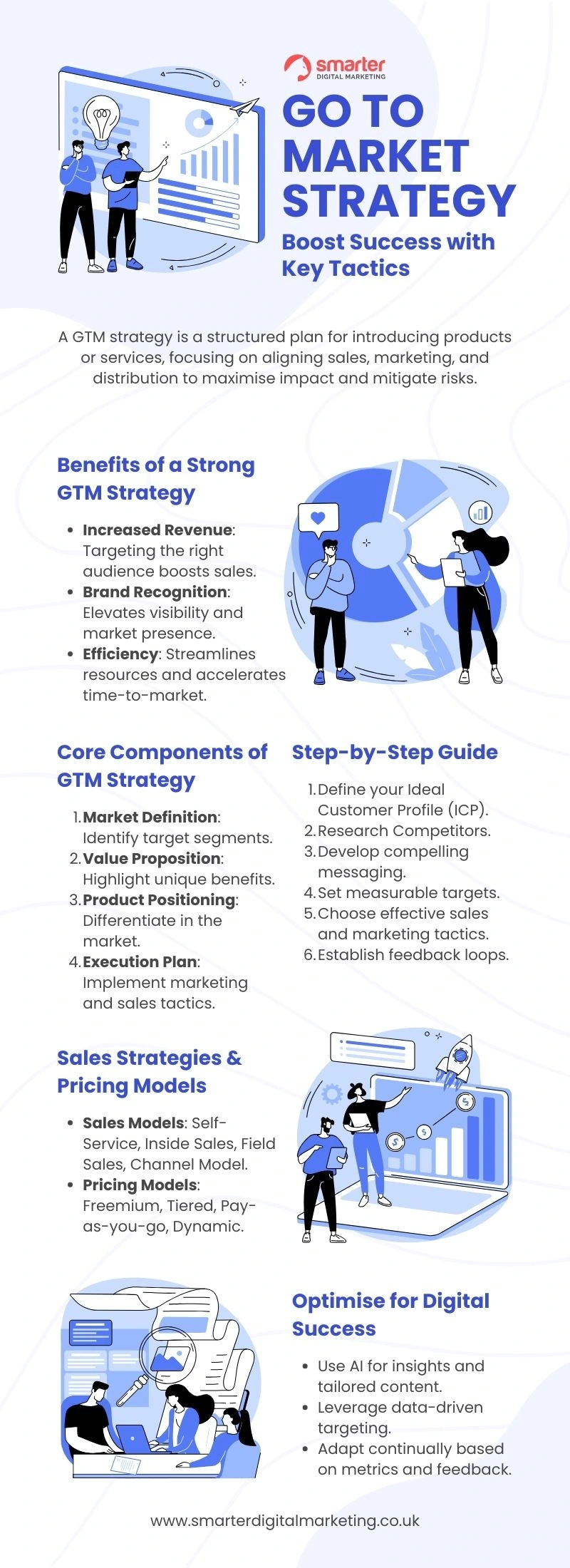
A go-to-market (GTM) strategy is a meticulously crafted plan that guides businesses in introducing new products or services to the market. This strategy is pivotal for aligning various organisational functions to ensure a successful product launch. By defining target market profiles, creating a comprehensive marketing plan, and establishing an efficient sales and distribution strategy, a GTM strategy mitigates risks associated with product launches and enhances market entry effectiveness.
- Increased Revenue: By strategically targeting the right audience, businesses can optimise their sales and maximise revenue.
- Improved Brand Recognition: A well-executed GTM strategy elevates brand visibility and fosters a strong market presence.
- Enhanced Efficiency: Streamlined processes and clear objectives lead to more efficient use of resources and faster time-to-market.
The essential components of a GTM strategy include identifying the target market, which involves narrowing down potential customers to focus marketing efforts effectively. Crafting a marketing plan is crucial, as it outlines the tactics and channels to engage the target audience. A solid sales and distribution strategy ensures that the product reaches customers seamlessly. These elements collectively form a robust framework that guides businesses from product development to market introduction, ensuring a competitive edge and fostering long-term growth.
Key Components of a Successful Go-to-Market Strategy Framework
Understanding buyer personas and mapping the buyer’s journey are vital in crafting a successful go-to-market strategy. Who is the target customer? This question is best answered by developing detailed buyer personas that encapsulate demographic information, behavioural patterns, and purchasing habits. Once these personas are established, the next step is to map the buyer’s journey. This involves recognising the stages a customer goes through from awareness to consideration and ultimately to decision-making. Precise insights into these stages enable businesses to tailor their marketing and sales efforts effectively.
Crafting a Value Matrix
A value matrix is the backbone of a GTM strategy, identifying the key benefits of a product or service and aligning these with customer needs. How does the product solve the customer’s problem? By answering this question, businesses can prioritise features that address specific pain points within different buyer personas. The value matrix also helps in formulating messaging that resonates with the target audience, thereby enhancing engagement and conversion rates.
| Component | Description |
| Market Definition | Identifying specific segments to focus marketing efforts effectively. |
| Value Proposition | Highlighting the unique benefits and solutions offered by the product. |
| Product Positioning | Determining where the product fits in the market and how it stands out. |
| Execution Plan | Implementing strategies to reach and convert the target audience. |
These elements work in unison to form a cohesive GTM strategy framework. Market definition sets the stage by narrowing down the audience focus, while the value proposition articulates why the product is the best choice. Product positioning differentiates the offering within a competitive landscape, ensuring it captures the intended market segment. Finally, an execution plan brings the strategy to life, aligning marketing and sales efforts to drive successful market entry and growth. This integrated approach not only streamlines product launch but also establishes a foundation for long-term success.
Step-by-Step Guide for Developing a Go-to-Market Strategy
A methodical approach is crucial when developing a go-to-market strategy. By following structured steps, businesses can effectively align their marketing and sales efforts, ensuring a successful product introduction. This structured method reduces risks and maximises opportunities for growth and market penetration.
- Define Your Ideal Customer Profile (ICP): Identify the characteristics of the customers who would benefit most from the product.
- Research Competitors: Analyse competitors to understand their strengths and weaknesses and identify potential gaps in the market.
- Develop Messaging: Craft compelling messaging that resonates with the target audience and highlights the product’s unique value.
- Set Clear Targets: Establish measurable goals to guide marketing and sales efforts, ensuring alignment across departments.
- Choose the Right Tactics: Select tactics that align with business objectives and target audience preferences.
- Establish a Feedback Loop: Create a system for collecting and analysing feedback from marketing, sales, and product teams to refine strategies.
Selecting the Right Sales StrategyChoosing an appropriate sales strategy is vital to reaching and converting target audiences effectively. The selection depends on the product complexity, market demands, and customer preferences. Common sales strategies include:
- Self-Service Model: Suitable for simple products where customers prefer minimal interaction.
- Inside Sales: Involves remote sales activities, ideal for reaching a broad audience efficiently.
- Field Sales: Requires a direct, in-person approach for complex or high-value transactions.
- Channel Model: Utilises third-party partners to extend market reach and leverage existing relationships.
Feedback loops play a critical role in refining and optimising the go-to-market strategy. By continuously gathering data from sales, marketing, and product development teams, businesses can make informed adjustments to their strategies. This iterative process ensures the GTM strategy remains relevant and adaptive to market changes, ultimately improving execution and driving success.
Examples of Successful Go-to-Market Strategies
Learning from successful go-to-market (GTM) strategies provides valuable insights for businesses aiming to optimise their own market entry tactics. By examining real-world examples, companies can identify effective approaches that align with their specific market needs and objectives, ultimately fostering growth and competitive advantage.
- Salesloft’s Rebranding and UI Updates: Salesloft enhanced its market position by executing a comprehensive rebranding strategy paired with user interface updates. This approach not only refreshed its brand image but also improved user experience, leading to increased customer engagement and satisfaction.
- Cognism’s Focus on Accurate Contact Data: Cognism distinguished itself in the business development sector by prioritising the accuracy of contact data. This focus enabled them to deliver more reliable and effective solutions, resulting in heightened trust and credibility among their clientele.
- Gong’s Sophisticated Brand Image Transition: Gong successfully transitioned to a more sophisticated brand image, which helped them appeal to a broader, more discerning customer base. This strategic shift allowed Gong to strengthen its market presence and attract higher-value accounts.
These case studies highlight the significance of aligning GTM strategies with market demands and business objectives. Key insights include the importance of brand positioning, the value of accurate data for credibility, and the impact of user experience enhancements. By integrating such tactics, businesses can refine their GTM strategies and better position themselves for success in competitive markets.
The Role of Pricing and Channel Strategy in a GTM Plan
Pricing strategies are pivotal in determining a product’s market entry success. They directly influence customer perception, competitive positioning, and revenue potential. The choice of a pricing model can significantly impact a product’s attractiveness to the target market and its overall adoption rate. Effective pricing strategies allow businesses to optimise their value proposition and enhance their competitive edge.
- Freemium
- User-based
- Tiered
- Pay-as-you-go
- Dynamic
- Skimming
Importance of Channel Strategies and Strategic Partnerships
Channel strategies dictate how products reach the target audience, affecting distribution efficiency and customer engagement. A well-planned channel strategy ensures that the product is accessible to the intended market segments, thereby facilitating higher sales volumes. For startups, selecting appropriate channels is crucial, as it can determine their initial market footprint and growth trajectory.
Strategic partnerships are equally vital, offering expanded market reach and enhancing brand credibility. Collaborating with established entities can provide leverage in new markets, reduce entry barriers, and improve brand perception. These partnerships enable businesses to tap into existing networks and customer bases, accelerating market penetration.
Integrating pricing and channel strategies into a cohesive GTM plan requires careful alignment of objectives and resources. Pricing models should complement the chosen distribution channels to maximise customer acquisition and retention. By synergising these elements, businesses can efficiently navigate market complexities, bolster their market presence, and drive sustainable growth. This holistic approach to GTM planning ensures that all facets of market entry are optimally configured for success.
Optimising the Go-to-Market Strategy for Digital Success
Digital strategies are integral to modern go-to-market (GTM) plans, enabling businesses to reach and engage audiences more effectively. How can digital strategies enhance GTM plans? Precision is achieved through data-driven insights, which allow companies to tailor their approaches based on real-time customer behaviours and preferences. These insights facilitate better targeting, reducing wastage and improving conversion rates. AI and generative AI are also revolutionising GTM strategies by automating customer insights and generating personalised marketing content. This automation enhances efficiency, enabling faster, smarter product launches and adaptation to market changes.
- Leverage AI to automate insights and generate targeted content.
- Utilise data-driven insights to refine audience targeting and messaging.
- Continuously adjust strategies based on performance metrics and feedback.
- Focus on digital transformation to streamline operations and improve agility.
Continual strategy adjustment is crucial in adapting to dynamic market conditions. Why is ongoing adjustment important? Precision in strategy optimisation stems from the ability to respond to evolving customer needs and competitive landscapes. Embracing digital transformation not only streamlines business operations but also enhances agility, ensuring that the GTM strategy remains relevant and effective. This approach allows businesses to maintain a competitive edge, driving growth and success in an increasingly digital marketplace.
Best Practices and Lessons from Go-to-Market Strategy Implementation

Learning from past go-to-market (GTM) strategy implementations is invaluable to improving future outcomes. Reviewing successful and unsuccessful campaigns provides insights into what tactics work and which pitfalls to avoid. Precision in understanding these lessons can significantly enhance a company’s ability to execute a GTM strategy effectively. Approximately 75% of product launches fail due to poor market planning, underscoring the necessity of a robust strategy.
- Leverage Product-Led Strategies: Focus on demonstrating the product’s value to reduce customer acquisition costs effectively.
- Involve Key Stakeholders: Engage a small group of senior stakeholders from sales, marketing, and product departments to align objectives and streamline decision-making.
- Conduct Thorough Market Research: Ensure comprehensive market research to accurately define target audiences and understand competitive landscapes.
- Prioritise Flexibility and Adaptation: Remain adaptable to market feedback and changing conditions to refine strategies over time.
Failed product launches often stem from a lack of clear market understanding and inadequate stakeholder involvement. Precision in market research and stakeholder engagement can mitigate these issues. To avoid common pitfalls, companies should ensure a cohesive strategy that integrates cross-departmental insights and remains flexible to adapt to real-time market dynamics. By focusing on these best practices, businesses can optimise their GTM strategies for greater success and resilience.
Final Words
Implementing a robust go-to-market strategy is vital for the successful introduction of new products or services.
Key highlights include defining precise market profiles, crafting a compelling strategy framework, and adopting effective sales tactics.
Real-world examples showcase diverse methods for strategic success.
Pricing and channel strategies deepen this approach, while digital optimisation ensures adaptability and relevance in today’s market.
By leveraging these insights and best practices, businesses can drive increased revenue and brand recognition, ultimately achieving substantial growth and a competitive edge.
FAQ
What is a go-to-market (GTM) strategy?
A go-to-market strategy is a detailed plan businesses use to introduce new products or services, involving target market definition, marketing, and sales strategies.
What are the key benefits of a GTM strategy?
Key benefits include increased revenue, improved brand recognition, and a competitive edge in the market.
What are the essential components of a GTM strategy?
Essential components include market definition, value matrix, buyer personas, product positioning, and execution planning.
What are the five go-to-market strategies?
The five strategies involve Inside Sales, Field Sales, Self-Service, Channel Model, and Strategic Partnerships.
How do I create a go-to-market strategy?
To create a GTM strategy, define your Ideal Customer Profile, research competitors, develop messaging, set targets, choose tactics, and establish feedback loops.
What is the GTM strategy framework?
The GTM strategy framework involves defining the market, identifying value propositions, understanding buyer journeys, and selecting marketing strategies.
What is a “go to new market” strategy?
A “go to new market” strategy focuses on entering a fresh market segment with tailored products, targeting unexplored audiences.
How do pricing strategies contribute to a GTM plan?
Pricing strategies, like freemium or tiered models, influence market entry and customer acquisition.
What is the role of channel strategy in a GTM plan?
The channel strategy determines how and where customers are reached, shaping purchase incentives and brand visibility.
How can a GTM strategy be optimised for digital success?
Optimising a GTM strategy involves leveraging AI, data-driven insights, and embracing digital transformation for smarter product launches.
For agency support with this, see our PPC management and local SEO across Scotland and the UK.
