
What Is Page Speed Optimisation?
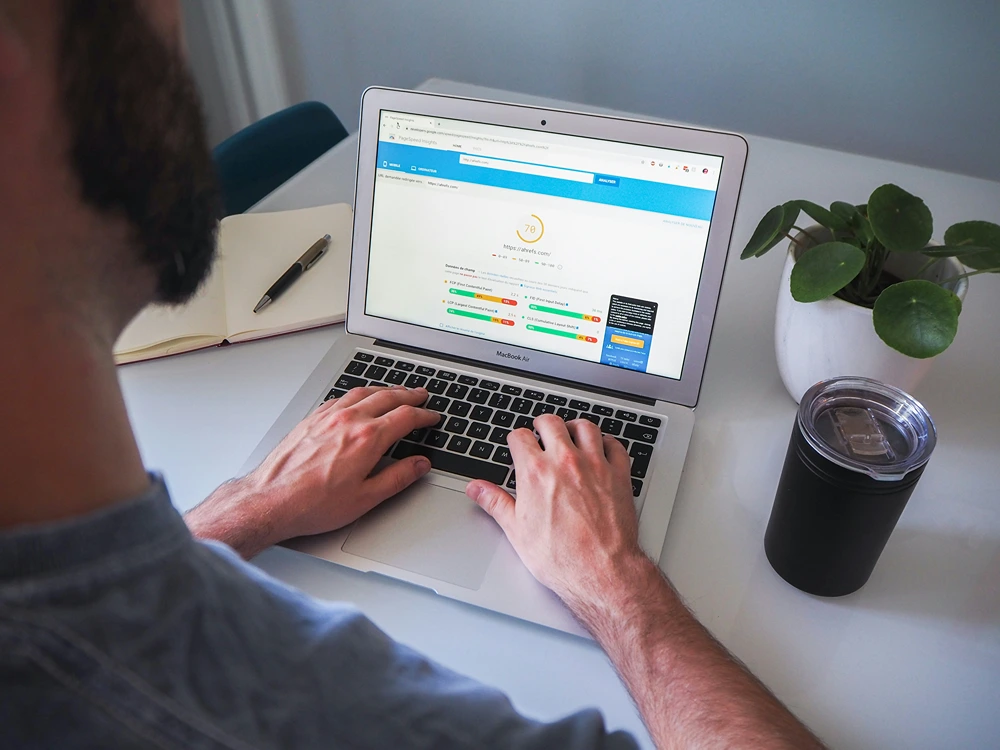
Page speed optimisation is the process of speeding up your website in order to ensure that pages load more quickly for visitors.
Your page loading speed can be affected by many different variables. Lower speeds can lead to less traffic staying on your website for longer periods of time, as well as poor website performance.
Why Is Page Speed Optimisation Important For Your Website?
The loading speed of your website is a crucial factor in how visitors interact with your site and its contents.
If you have a website that takes a long time to load, you may see a drop in traffic as well as an increased bounce rate.
Bounce rate is the percentage of the people that land on your website and then navigate away without taking an action.
In 2015 the Mobilegeddon search engine algorithm update from Google lead to page speed becoming one of Google’s main ranking factors when managing search engine rankings.
This means that page loading speed on your website has never been more important.
It counts as a primary ranking factor for search engines and can severely impact on the user experience when users are visiting your website.
What Impact Does Page Loading Speed Have?
There is an important link between your page loading speed and the number of visitors to your website.
The Slower your website loading time, the higher the bounce rate of website visitors is likely to be.
A recent study from Geoff Kenyon gives us an insight into loading speeds across the web:
- If your website loads within a period of 5 seconds, that is faster than one quarter of websites across the internet.
- If your website loads within a period of 2.9 seconds, that is faster than half of websites across the internet.
- If your website takes just 1.7 seconds to load, then this is quicker than three quarters of the websites across the internet.
- If your website takes 0.8 seconds to load, then you have a website which is faster than over ninety four percent of the web.
Long page loading times can lead to bad first impressions for website visitors as well as lower conversion rates. Its vital that page loading speeds are optimised to allow for reasonable page loading speeds and improved SEO performance.
How Can Page Speed Optimisation Influence SEO Performance?
SEO performance is one of many factors that can be directly impacted by page speed optimisation.
The main way in which this happens is that search engines monitor the speed at which website pages are loading.
If a website is not loading quickly, this may indicate that less pages can be crawled by the search engines.
Less pages being crawled in conjunction with poor page loading times will likely lead to a drop in search rankings and poor SEO performance.
In order to ensure you can stay on top of your SEO performance you should follow some of the key steps listed below.
Leverage Browser Caching
By default, websites store cached data and information for each website visitor to the website. Over time these caches can become congested and may result in decreased page speed loading times.
To improve page speed times, you may wish to improve page loading speeds through levered browser caching.
This process works by installing plugins to speed up and improve your website.
There are a variety of plugins available on platforms such as WordPress which you can use to improve your website loading times and search engine ranking performance.
Here are our key take home points for browser cache optimisation:
- Install plugins to reduce caching.
- Minimise use of third-party scripts.
- Use Google Analytics to leverage browser caching.
Image Compression
Reducing the size of images can be key to improving your page speed loading time. Use CSS sprites to ensure that a template is created for images across your website.
The sprites ensure that multiple images are grouped together into one image that loads much faster. This reduces the overall load on your website and allows for a smoother user experience and faster loading times on your site.
For the best image compression results, follow some of these steps:
- Use Webp image format where possible.
- Make use of scaled images.
- Ensure all images are compressed to suitable file sizes.




Do you have a project in mind? Get An Estimate for your campaign
Speak to our dedicated and experienced project managers to begin planning your digital campaign today.